Stock status
Viking axes were versatile, lightweight tools and devastating weapons used for daily survival and combat during the Viking Age (793–1066 AD). They were far more common than swords because they were affordable, easy to forge, and doubled as essential woodworking gear.
Historical Types
- Bearded Axe (Skeggøx): Features an extended lower blade edge (“beard”) that hooks downward, protecting the user’s hand and allowing for pulling shields.
- Dane Axe: A large, thin-bladed, two-handed poleaxe used by elite late-period warriors for sweeping, high-damage strikes.
- Broad Axe: A heavy utility and hewing tool designed to shape logs for building longships and Norse houses.
Design and Craftsmanship
- Construction: Forged from iron bodies with forge-welded high-carbon steel edges to keep a sharp profile.
- Weight: Real historical combat axes were surprisingly light and fast, weighing typically between 1.5 to 2.5 pounds.
- Modern Replicas: Hand-forged replicas from makers like Norse Tradesman or AncientSmithy generally range from $100 to $450 depending on steel folding and wood carving details.
 Battle Axes
 Viking Axes
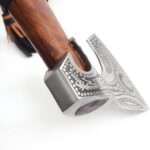 Engraved Axes
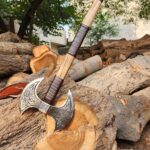 Double Head Axes